
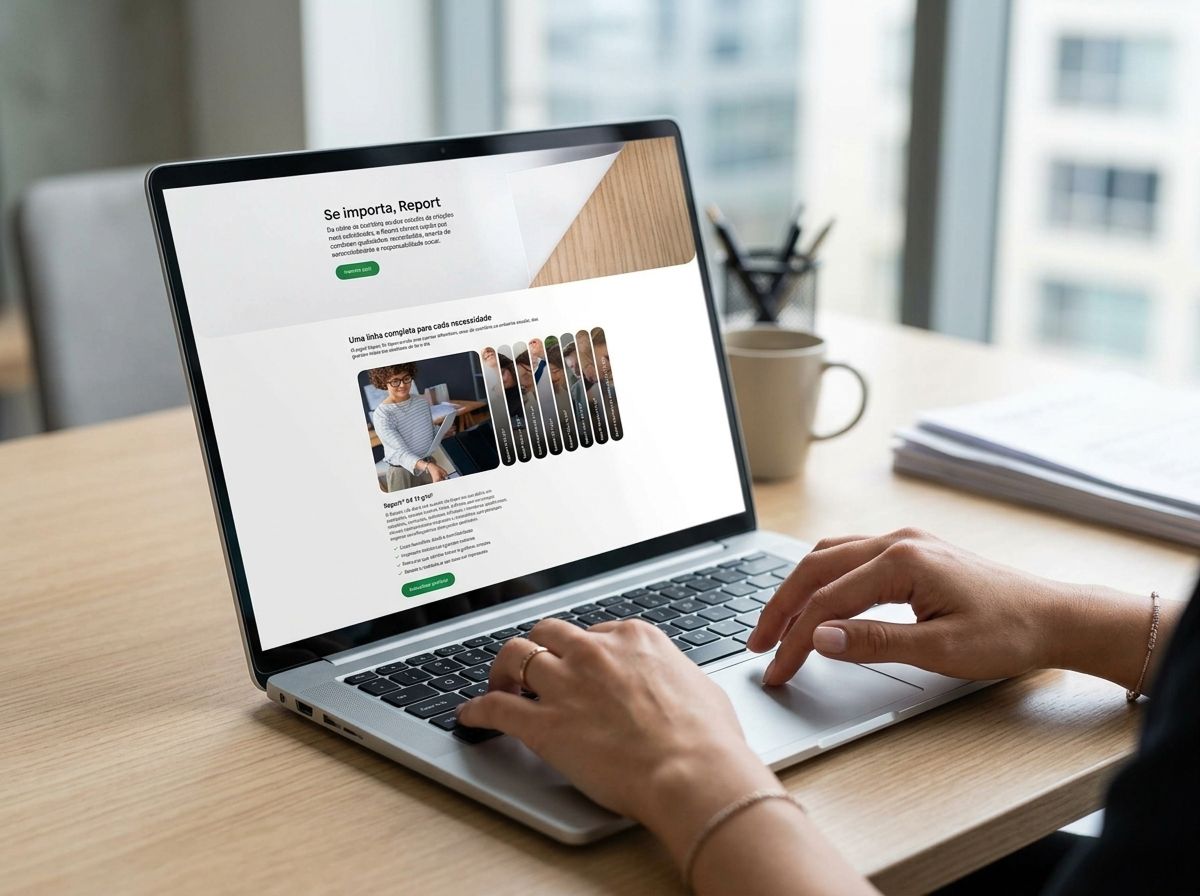
Report by Suzano
An acquisition landing page for Report, one of Brazil's best-known paper lines, with separate routes for buyers and resellers and sales attributed to each of its 9 products.
Project context
- Client
- Suzano S.A., the world's largest pulp producer and one of Latin America's largest paper makers, listed on B3 and the NYSE, for its Report paper brand.
- Segment
- Consumer goods · pulp and paper · copy paper.
- Stage
- A publicly traded company more than 100 years old, with about 37,000 employees.
- Business model
- Paper sold through retail, marketplaces and the Loja Suzano store. The landing page doesn't sell: it educates, qualifies leads and sends buyers to loja.suzano.com.br.
- Target audience
- Offices, schools, home offices, students and professionals in fields such as law, architecture, design and crafts, plus stationery shops and resellers that want to carry the brand.
- Role and responsibilities
- Web Design Consultant. Led the page copy, funnel architecture, UI kit and Figma prototype, and the alignment with brand and business stakeholders through publication. The client's team built it in Webflow.
- Team
- Suzano's brand and business stakeholders, and the client's Webflow development team.
- Period
- 2025.
Challenge
A brand strategy that existed on paper, and a page that had to make it count at the moment of choice.
A commodity
Copy paper is chosen on price and shelf availability, and Report's nine products look nearly identical to someone outside the trade.
Two audiences, one page
Consumers and resellers arrive through the same page with different intents and sales cycles.
A sale the page can't see
Conversion happens on a store the page doesn't control, so the client couldn't attribute sales to it.
Key actions
Brand strategy turned into page copy
The brand positioning written as page text, with sustainability tied to Suzano's corporate purpose and SEO built into the headings, search terms and metadata.
Products organized by use occasion
The nine products rewritten around who buys them and where they're used, each with four standardized benefits for side-by-side comparison, and an FAQ on real objections about brand, performance and certification.
Two routes, two funnels
Separate paths for buying and for reselling. The reseller route qualifies volume and origin, with data-collection consent built into the flow.
Every exit measured
Each product's call to action opens the store pre-filtered by grammage, format and family, with a source tag per product, so traffic and orders trace back to the page.
A UI kit made for Webflow
Responsive components and styles built around the platform's constraints, so the developers assembled the page without reinterpreting design decisions.
Prototype and alignment to launch
A complete Figma prototype, and brand and business stakeholders kept aligned on content and funnel decisions through publication.
Impact
- 9
- products reorganized by use occasion
- 4
- standardized benefits per product, for side-by-side comparison
- 2
- routes, for buyers and for resellers, with leads separated by funnel
- 9
- tracked exits to the store, one per product, for sales attribution